Author: Sander Timmer

PhD student in computational genetics at Cambridge University and EMBL-European Bioinformatics Institute
"That legacy will endure – sparked by a man who taught us the enormous power…

"That legacy will endure – sparked by a man who taught us the enormous power…

"That legacy will endure – sparked by a man who taught us the enormous power of one small step."

Reshared post from +NASA

Statement by the President on the Passing of Neil Armstrong | The White House
Statement by the President on the Passing of Neil Armstrong

Interesting documentary series on the BBC iPlayer about last years riots in London's boroughs and some other major UK cities. First episode was taking the point of view of the rioters and the second one of the overwhelmed and undermanned police forces

Interesting documentary series on the BBC iPlayer about last years riots in London's boroughs and some other major UK cities. First episode was taking the point of view of the rioters and the second one of the overwhelmed and undermanned police forces

http://goo.gl/3VE19

#bbc #iplayer #londonriots

 
Interesting documentary series on the BBC iPlayer about last years riots in London's…

Interesting documentary series on the BBC iPlayer about last years riots in London's…

Interesting documentary series on the BBC iPlayer about last years riots in London's boroughs and some other major UK cities. First episode was taking the point of view of the rioters and the second one of the overwhelmed and undermanned police forces.

http://goo.gl/3VE19

#bbc   #iplayer   #londonriots  

Ant-enna: a project where the National Trust is gluing antenna's to all 1000…

Ant-enna: a project where the National Trust is gluing antenna's to all 1000…

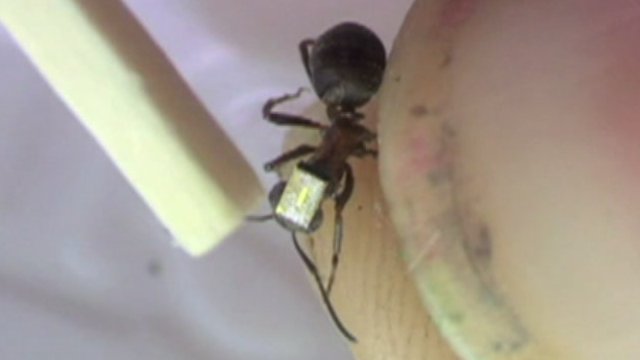
Ant-enna: a project where the National Trust is gluing antenna's to all 1000 ants to study their movements and interactions in a local forest. Sounds like a super cool study going on there (not the least because it features ants, ants are awesome!). Can't wait to see results from this. 

http://goo.gl/UtfCV

#ants   #science  

I think for a paper like this it would be more interesting to see if the amount of mutations with a functional effect (coding or regulatory) is also increasing with age and with what rate this is happening.

I think for a paper like this it would be more interesting to see if the amount of mutations with a functional effect (coding or regulatory) is also increasing with age and with what rate this is happening.

Another great thing would be if they would actually sequence the same person with samples from each a different age and see the actual changes instead of the inferred mutations.

Paper: http://www.nature.com/nature/journal/v488/n7412/full/nature11396.html#/affil-auth
#paper
#genomics #genetics #sequencing #evolution

Originally shared by +Lorna Salgado

"Men in their 20s harbor about 25 random mutations, while a 40-year-old man has 65 mutations on average."

Scientists have found solid evidence that older men have more random mutations in their sperm cells. They're warning that can cause autism, schizophrenia and a long list of other genetic diseases in their offspring.

The new report, in the journal Nature, comes from deCODE Genetics, an Icelandic firm that studied the entire genomes of 78 families involving 219 individuals.

It's not the first time researchers have suggested the father's age is linked to increased genetic risk. The hypothesis goes back nearly a century. But the Icelandic researchers have shown that the father's contribution to genetic disorders is far higher than the mother's.

It makes sense. Men churn out around 200 million sperm a day, providing 200 million daily opportunities for spontaneous "point" mutations when genes get mis-copied. But once women reach puberty, they don't make new egg cells, so their rate of mutations – usually errors in chromosomes, or whole groups of genes – is fixed.

And sure enough, the new paper shows that the rate of new mutations rises steadily in men's germ cells – doubling every 16 1/2 years. Men in their 20s harbor about 25 random mutations, while a 40-year-old man has 65 mutations on average.

Kids Of Older Fathers Likelier To Have Genetic Ailments : NPR
Icelandic scientists have found solid evidence that older men have more random mutations in their sperm cells. They’re warning that can cause autism, schizophrenia and a long list of other genetic dis…

I think for a paper like this it would be more interesting to see if the amount of…

I think for a paper like this it would be more interesting to see if the amount of…

I think for a paper like this it would be more interesting to see if the amount of mutations with a functional effect (coding or regulatory) is also increasing with age and with what rate this is happening. 

Another great thing would be if they would actually sequence the same person with samples from each a different age and see the actual changes instead of the inferred mutations. 

Paper: http://www.nature.com/nature/journal/v488/n7412/full/nature11396.html#/affil-auth
#paper  
#genomics    #genetics   #sequencing   #evolution  

Reshared post from +Lorna Salgado

"Men in their 20s harbor about 25 random mutations, while a 40-year-old man has 65 mutations on average."

Scientists have found solid evidence that older men have more random mutations in their sperm cells. They're warning that can cause autism, schizophrenia and a long list of other genetic diseases in their offspring.

The new report, in the journal Nature, comes from deCODE Genetics, an Icelandic firm that studied the entire genomes of 78 families involving 219 individuals.

It's not the first time researchers have suggested the father's age is linked to increased genetic risk. The hypothesis goes back nearly a century. But the Icelandic researchers have shown that the father's contribution to genetic disorders is far higher than the mother's.
 
It makes sense. Men churn out around 200 million sperm a day, providing 200 million daily opportunities for spontaneous "point" mutations when genes get mis-copied. But once women reach puberty, they don't make new egg cells, so their rate of mutations – usually errors in chromosomes, or whole groups of genes – is fixed.

And sure enough, the new paper shows that the rate of new mutations rises steadily in men's germ cells – doubling every 16 1/2 years. Men in their 20s harbor about 25 random mutations, while a 40-year-old man has 65 mutations on average.

Embedded Link

Kids Of Older Fathers Likelier To Have Genetic Ailments : NPR
Icelandic scientists have found solid evidence that older men have more random mutations in their sperm cells. They’re warning that can cause autism, schizophrenia and a long list of other genetic dis…