My views on anything

Reimagining leprosy elimination with AI analysis of a combination of skin lesion images with demographic and clinical data – The Lancet Regional Health – Americas

Reimagining leprosy elimination with AI analysis of a combination of skin lesion images with demographic and clinical data – The Lancet Regional Health – Americas

See the full paper at The Lancet Regional Health – Americas or Download Paper PDF directly.

AI4Leprosy: A research project that aims to develop an AI-driven diagnosis assistant for leprosy, based on skin images and clinical data.

  • Dataset: The researchers collected 1229 skin images and 585 sets of metadata from 222 patients with leprosy or other dermatological conditions in a Brazilian leprosy referral center. The dataset is open-source and available for other researchers to use.
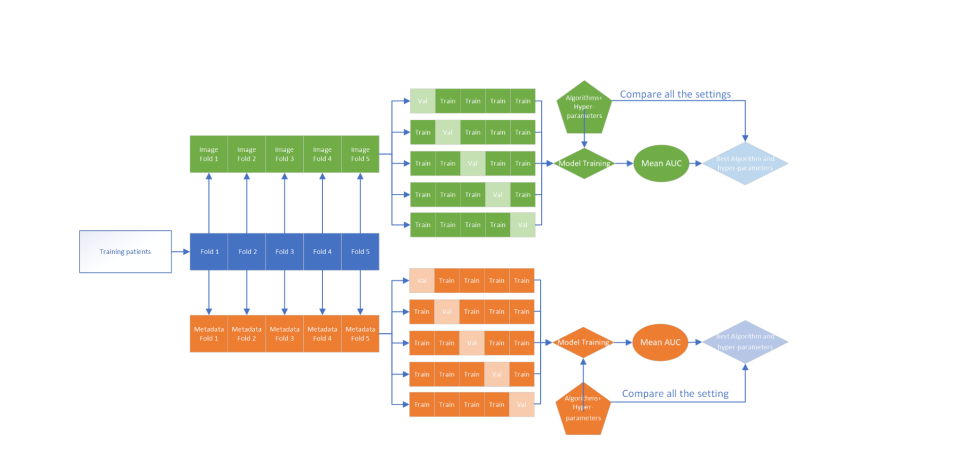
  • AI models: The researchers tested three AI models, using images and metadata both independently and in combination, to predict the probability of leprosy. They used convolutional neural networks (CNN) for image analysis and elastic-net logistic regression for metadata analysis.
  • Results: The best AI model achieved a high accuracy (90%) and area under curve (AUC) of 96.46% for leprosy diagnosis, using a combination of metadata and patient information. The most important clinical signs for leprosy were thermal sensitivity loss, nodules and papules, feet paresthesia, number of lesions and gender.
  • Implications: The AI model could be a useful tool to accelerate and improve leprosy diagnosis, especially in low-resource settings. The researchers plan to validate the model in larger and more diverse datasets, and to implement it in a smartphone app for frontline health workers.
Beyond building predictive models: TwinOps in biomanufacturing

Beyond building predictive models: TwinOps in biomanufacturing

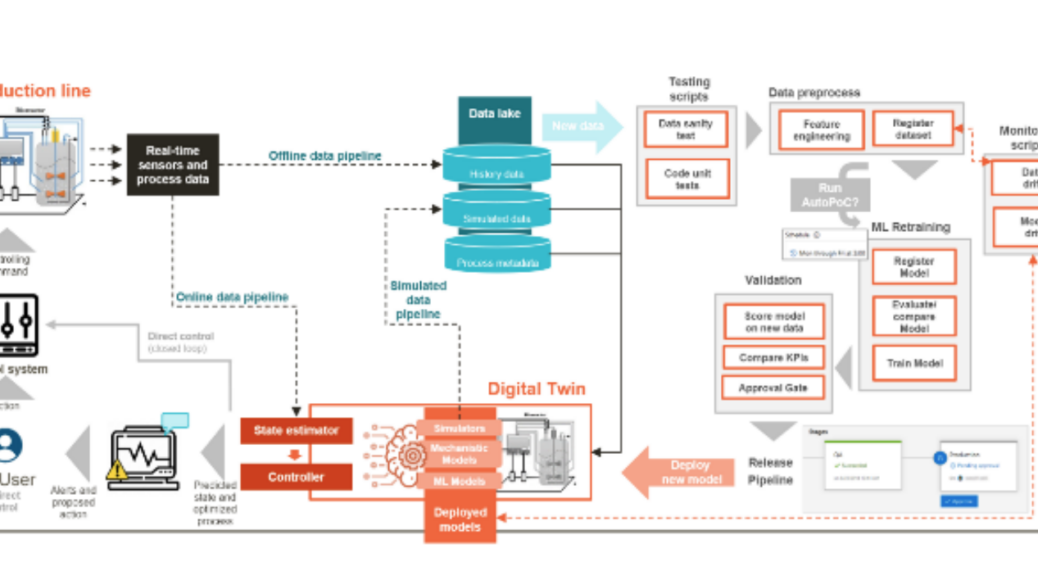
On the wave of more and more manufacturers embracing the pervasive mission to build digital twins, also biopharmaceutical industry envisions a significant paradigm shift of digitalisation towards an intelligent factory where bioprocesses continuously learn from data to optimise and control productivity. While extensive efforts are made to build and combine the best mechanistic and data-driven models, there has not been a complete digital twin application in pharma. One of the main reasons is that production deployment becomes more complex regarding the possible impact such digital technologies could have on vaccine products and ultimately on patients. To address current technical challenges and fill regulatory gaps, this paper explores some best practices for TwinOps in biomanufacturing – from experiment to GxP validation – and discusses approaches to oversight and compliance that could work with these best practices towards building bioprocess digital twins at scale.

Read the pre-print online: https://doi.org/10.36227/techrxiv.16478856.v1 or download the complete manuscript directly: Download PDF (TechRxiv Preprint).

Senior AI/ML engineer in Bengaluru, India at Novartis

Senior AI/ML engineer in Bengaluru, India at Novartis

I’m hiring a Senior AI/ML engineer in Bengaluru, India. You will work with the rest of our international team on delivering cutting edge AI/ML solutions to support our vaccines business. This is a great role to grow into a lead data scientist as well as developing your machine learning and modern DevOps skills.

https://gsk.wd5.myworkdayjobs.com/NovartisCareers/job/India—Karnataka—Bengaluru/Senior-AIML-Engineer_272917

My next career step: Novartis Vaccines

My next career step: Novartis Vaccines

Weird day, after nearly 5yrs years at Microsoft I’ve handed in my badge and laptop. Very much excited about my next step that is even deeper into healthcare, but also sad leaving such a great company with amazing people behind. 

I cannot be more proud to join Novartis as their new director of Analytics and AI. Their mantra feels like a homecoming: “We are a science-led global healthcare company with a special purpose: to help people do more, feel better, live longer.”